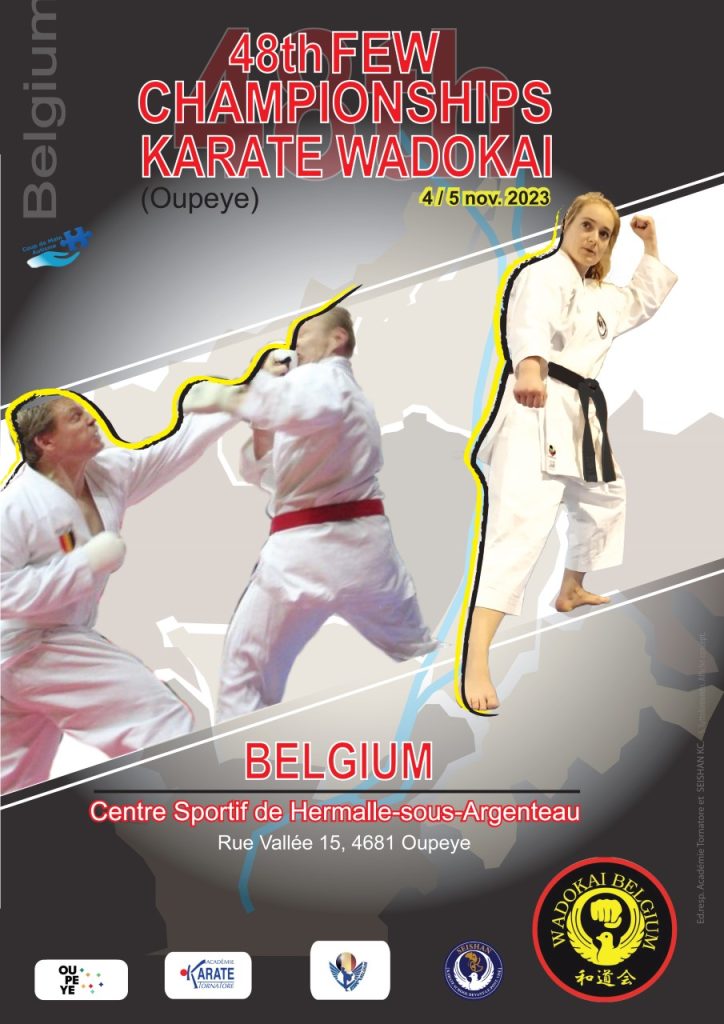
Wado-ryu karate has been created in 1934 by its master founder Otsuka Hironori (1892-1982). Wado-ryu was born by the mixture of the Okinawan Karate style with the traditional Japanese martial art, Shinto-yoshin-ryu Jyujyutsu, thus making it a strong rooted style in the old Japan. For more than 70 years, this karate style has been through a process of transformation and improvement, in the same time, keeping its traditional keystones. Along the years, Wado has given birth to many champions, worldwide, European and national.
The Wa kanji from Wado has been borrowed from the first amendment of the first Japanese Constitution, created by Shotoku Taishi. This first amendment postulates that Wa (harmony) represents Japan’s spirit itself – the Japanese spirit.
Do kanji symbolize road, way, and, through it, we understand the way we need to take, the right track for us to follow.
Therefore, Wado teaches us that Budo (martial arts) represents the way of harmony and that all the techniques we use must yield to this universal harmony. Wado is the harmony between sky, earth and humans, harmony based on the communion of these three essential elements.